
Measuring between around 7–9m, basking sharks are too big to study in the lab. So, when scientists wanted to understand what happens inside the heads of these animals during feeding, they got creative: turning to lasers, a forklift truck and hours on YouTube.
Marine biologist Mason Dean, a professor at City University of Hong Kong, is fascinated by how the skeletons of sharks and rays move while they’re feeding.
He’s particularly intrigued by basking sharks – the second largest shark on the planet. “It's an animal that really drastically changes the shape of its head as it feeds,” he says.
As ram filter-feeders, these sharks eat by swimming with their mouths agape as if they’re screaming into the void. This helps them capture tiny prey as water washes over their gills
This requires an “enlargement of the skeleton, which then increases the whole oral cavity volume to get much more water filtered,” says Mike Schindler, a PhD student at City University of Hong Kong.
- Orcas filmed eating great white sharks in the Gulf of California
- Sperm whales are pooping on orcas. Here's why
Studying these behemoths is not easy. Aside from their size, their endangered status prohibits people getting close to them in the water.
In the rare instance a dead shark washes up, researchers must race to dissect the body before it becomes too decomposed. International trade is highly regulated for conservation reasons. All this makes it exceptionally difficult to get hold of well-preserved specimens or study these animals’ anatomy.
That could be why Dean couldn’t find much in the literature. "I couldn't understand where the bits fit in the anatomy, and the way things were positioned,” he says.
Instead, his team had to piece together anatomical information from specimens in videos, photos or museum collections. “It's a little bit like a yard sale,” he says. Gathering information “required a detective hunt of going to as many museums as we could,” he says.
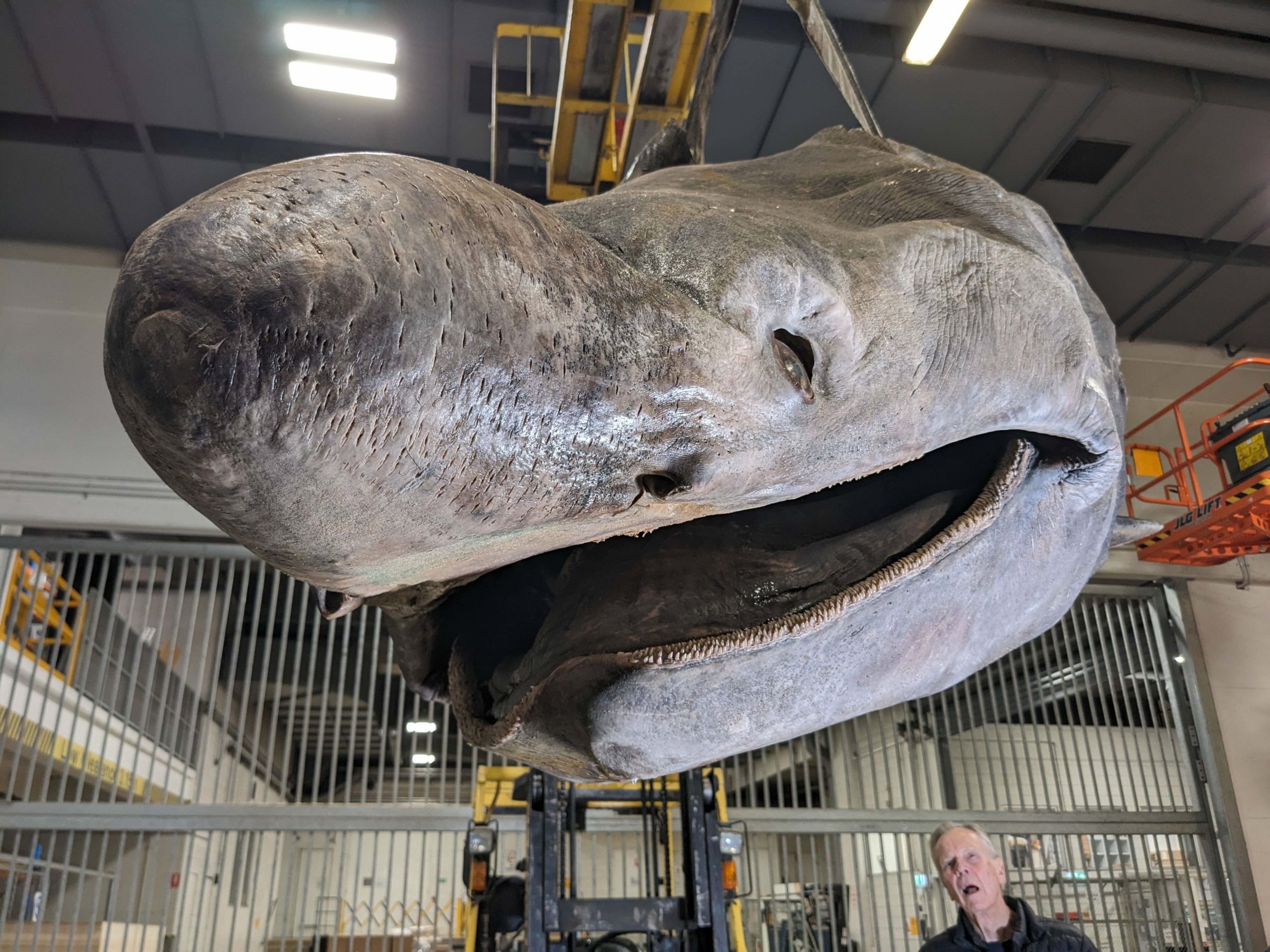
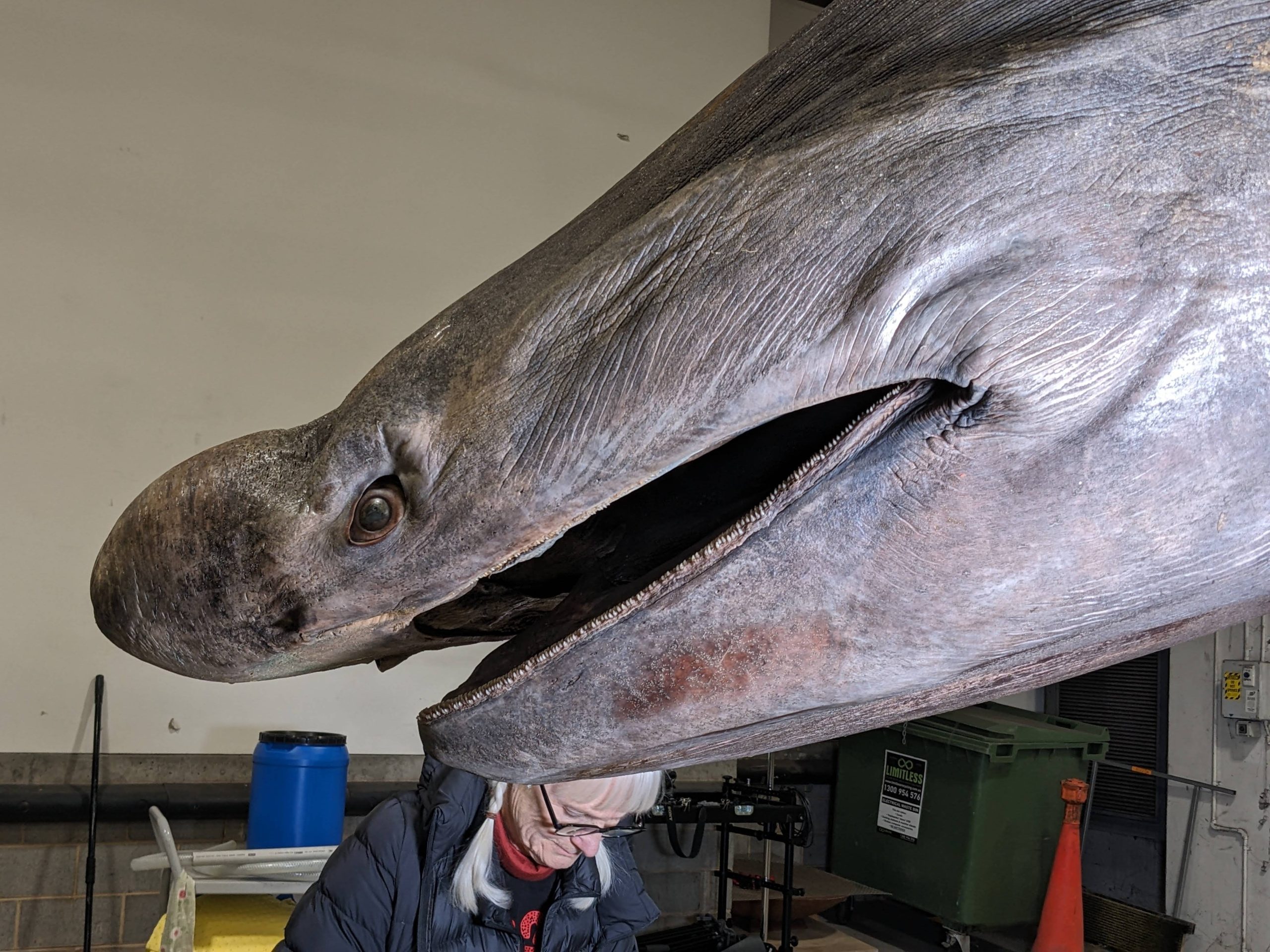
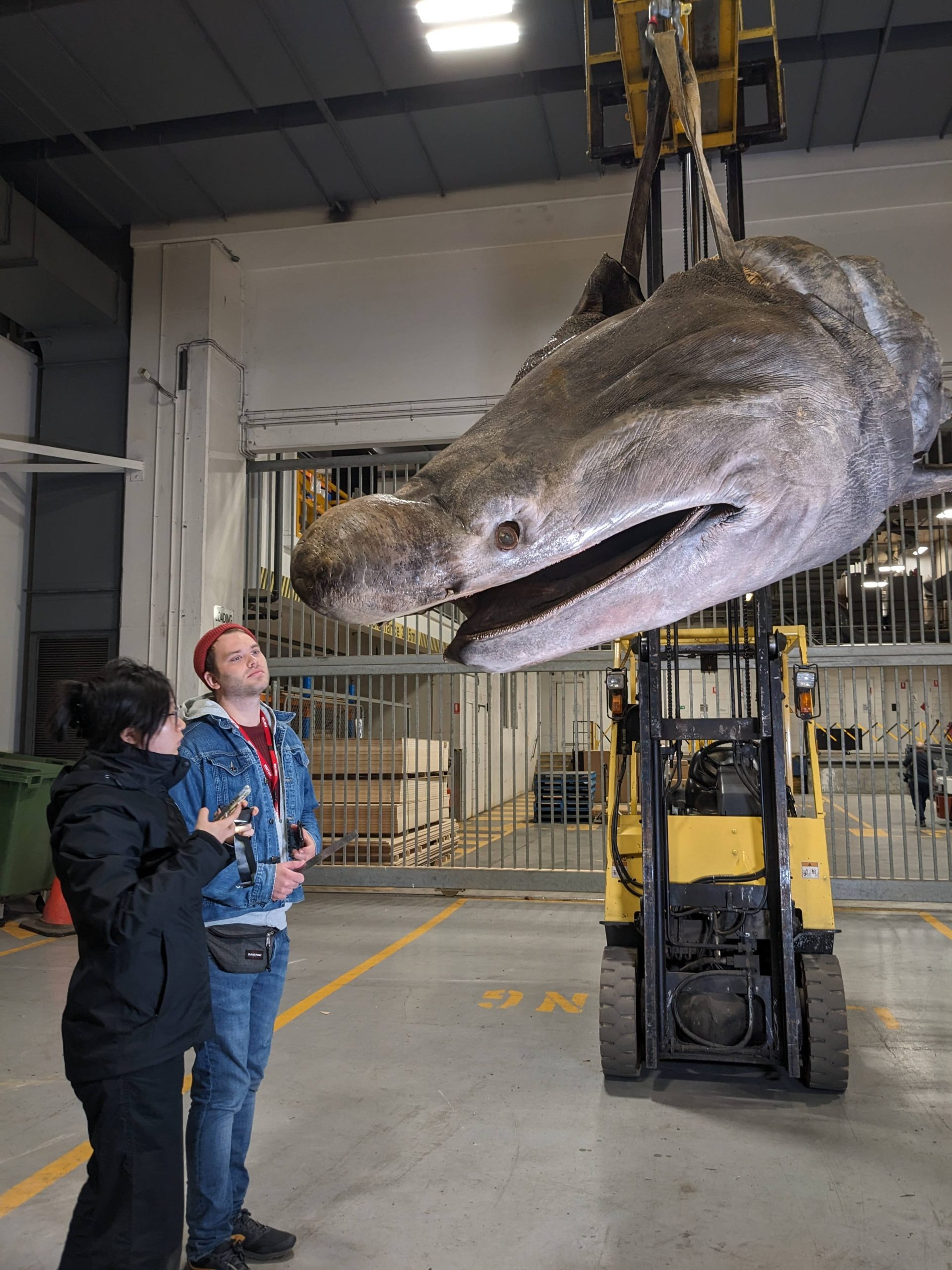
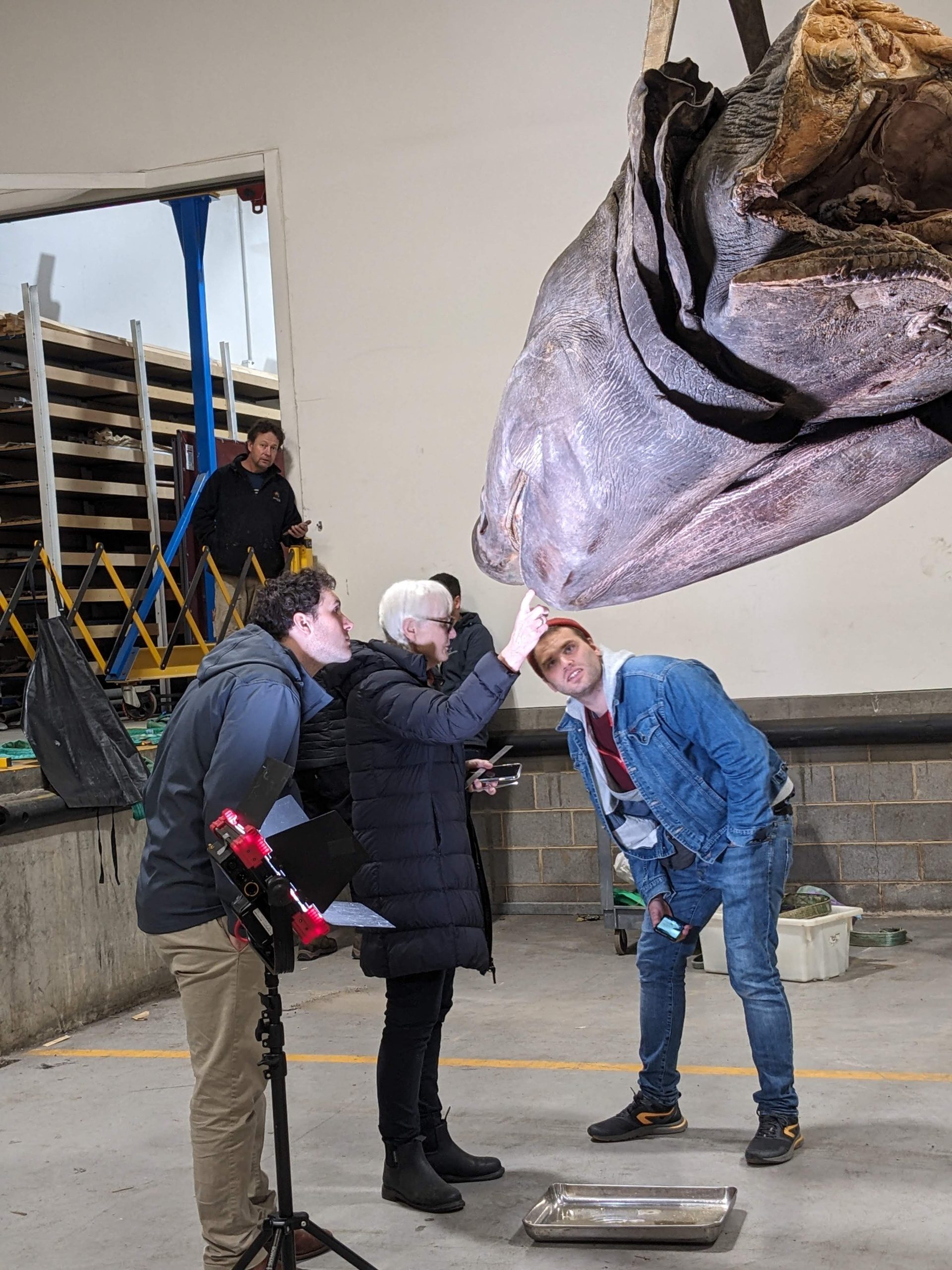
When Dean and colleagues put the word out that they were looking for basking sharks, they heard about a preserved specimen in Melbourne Museum’s collection. Better still, the open-mouthed shark had been laser scanned when it first arrived.
If this isn’t done when the shark is fresh, the chance is lost forever. “That’s the only period you can open the mouth,” explains Aurora Li, a researcher at University College London. Once the tissues are hardened in fixative, it’s too late. “You can never open it again without permanently damaging the specimen.”
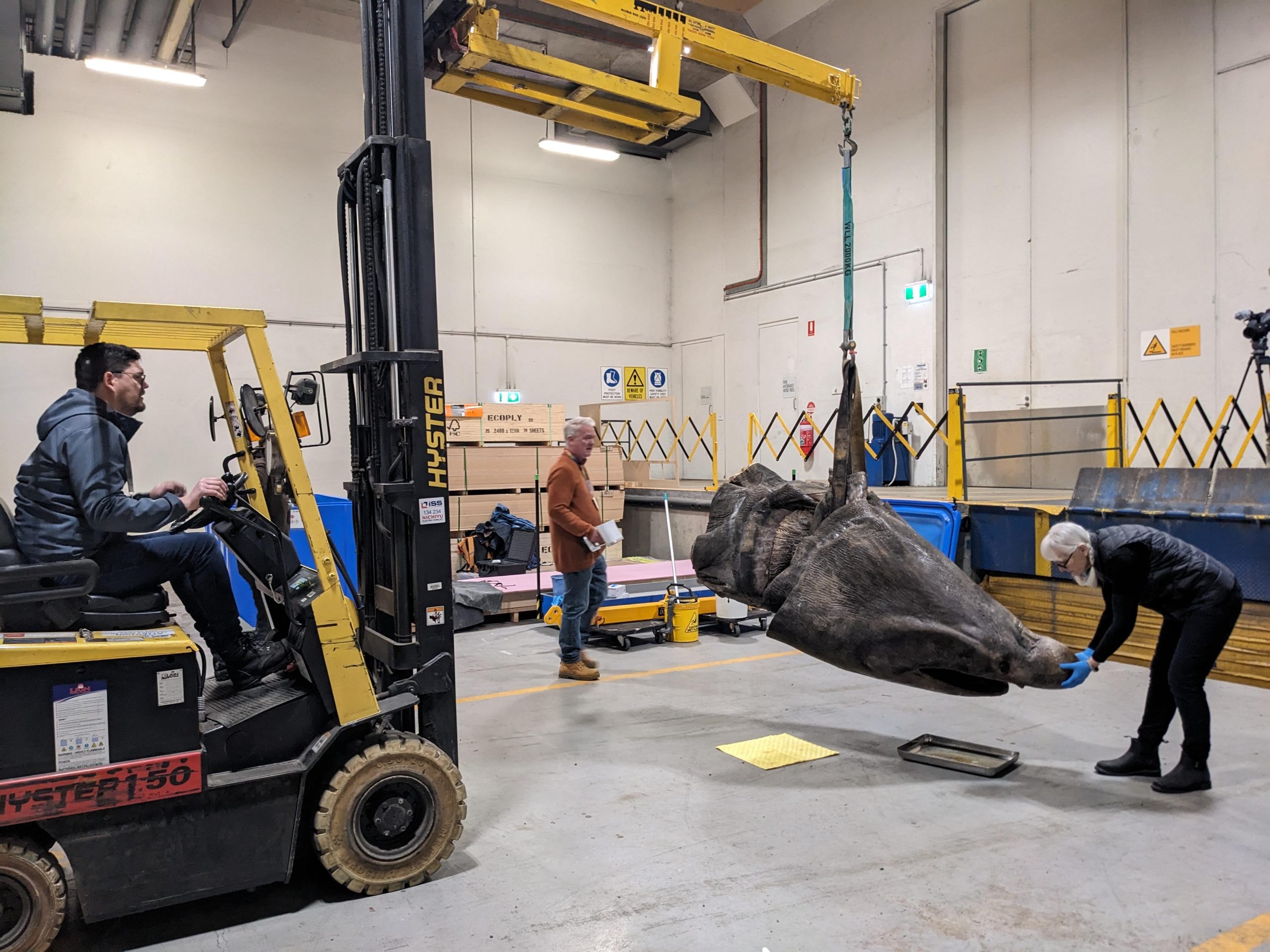
To understand how the mouth moves, they also needed a closed-mouth scan, which had never been taken. So, they had to remove the gigantic animal from its storage tank.
Dean remembers everyone coming out to see the leviathan being hauled out for its scan. “They brought this thing down to a loading dock and hoisted it up with a forklift,” he says.
Even with these scans, they wanted to examine the deep grooves between the shark’s gills. “The gill arches, compared to other sharks, are extremely elongated,” says Schindler. “It looks like an accordion.”
One way of peeping inside a basking shark’s mouth is by swimming beside one while feeding. “Maybe one of the few advantages of working with a basking shark is that it holds one body position for a very long time,” says Dean. If it swims by while someone is filming, they can capture lots of different views as it passes. “Then you can actually reconstruct something that can be analysed in three dimensions.”
This approach isn’t hugely practical. Even if they did manage to find a feeding shark to film, it’s difficult to get a clear picture inside the mouth. “There's so many bits, so many corners that are hard to look at unless you get exactly the right view, and the right specimen, and the right lighting,” he says.
So, they did what any good scientist would do: spent hours scrolling through social media. “I ended up spending a ridiculous amount of time just checking divers videos on YouTube,” says Li. She wasn’t just doomscrolling. She was “trying to find the best angle from, like, 0.5 seconds of information just to see what's happening.”
The team also reviewed other medical scans, some of which Dean had collected earlier in his career. For example, while visiting family, an opportunity popped up to scan a basking shark head from a nearby museum collection. “We loaded the shark into the trunk of her car and took it to a CT scan place that I'd somehow made a connection with,” he says.
One of these scans contained high resolution images that allowed the researchers to see exactly where the basking shark’s broom-like filter goes within the animal's skeleton. This highly unusual filter is unique in sharks and rays. It’s “this weird bristle-like structure with little hooks on the bottom,” says Dean. The scans allowed them to “track the hooks as they fit into the skeleton,” he says.
By combining all the YouTube stills to create a 3D model and putting this together with their other data, they created a ‘digital puppet’ reconstructing the skeleton of a feeding basking shark. They estimated that the shark’s throat expands by around 450% when it is feeding.
Their paper, which is supported by the Human Frontier Science Program (HFSP), is published in The Anatomical Record.
This project wouldn’t have been possible without carefully preserved museum specimens and scientists from all different disciplines working together, says Dean.
The team is in touch with professional videographers and museums around the world to continue solving the mysteries of basking sharks’ mouths. Li adds: “If anyone works in a museum that happens to have a basking shark head, please let Mason and Mike know.”
More wildlife stories from around the world
- Giant squid detected in deep-sea canyon off coast of Australia
- “Ghostly" ocean giant spotted at intersection of Pacific and Indian oceans
- "I started screaming." Scientists were filming dolphins in Australia, when this happened
- Colossal squid filmed alive in deep ocean for the first time ever
Top image credit: Museums Victoria


