A striking photograph of a polar bear peering into a seal breathing hole in the Arctic ice has won this year’s OurNature Environmental Photo & Video Award.
Audun Rikardsen’s image A Seal’s Nightmare (with one from the same series also shortlisted for the Wildlife Photographer of the Year competition) shows the bear looking directly into a camera that he set up beneath the ice.
The inspiration for the image came from one of Rikardsen's previous experiences in the Arctic, after a polar bear had dropped his camera into a hole and sunk it into deep water off Svalbard. But before it did, the polar bear had taken several ‘selfies’ of itself with the motion-activated camera.
When wondering how he could improve upon those images, Rikardsen developed a rig that used a motion sensor which would be triggered when a polar bear investigated the hole. During another trip near Svalbard, a bear approached the rig, triggering the camera – but it also attempted to haul up the entire camera rig. Rikardsen then had to wait eight hours for the bear to wander off and to check whether he was successful, resulting in a unique perspective of one of the Arctic’s most successful predators.
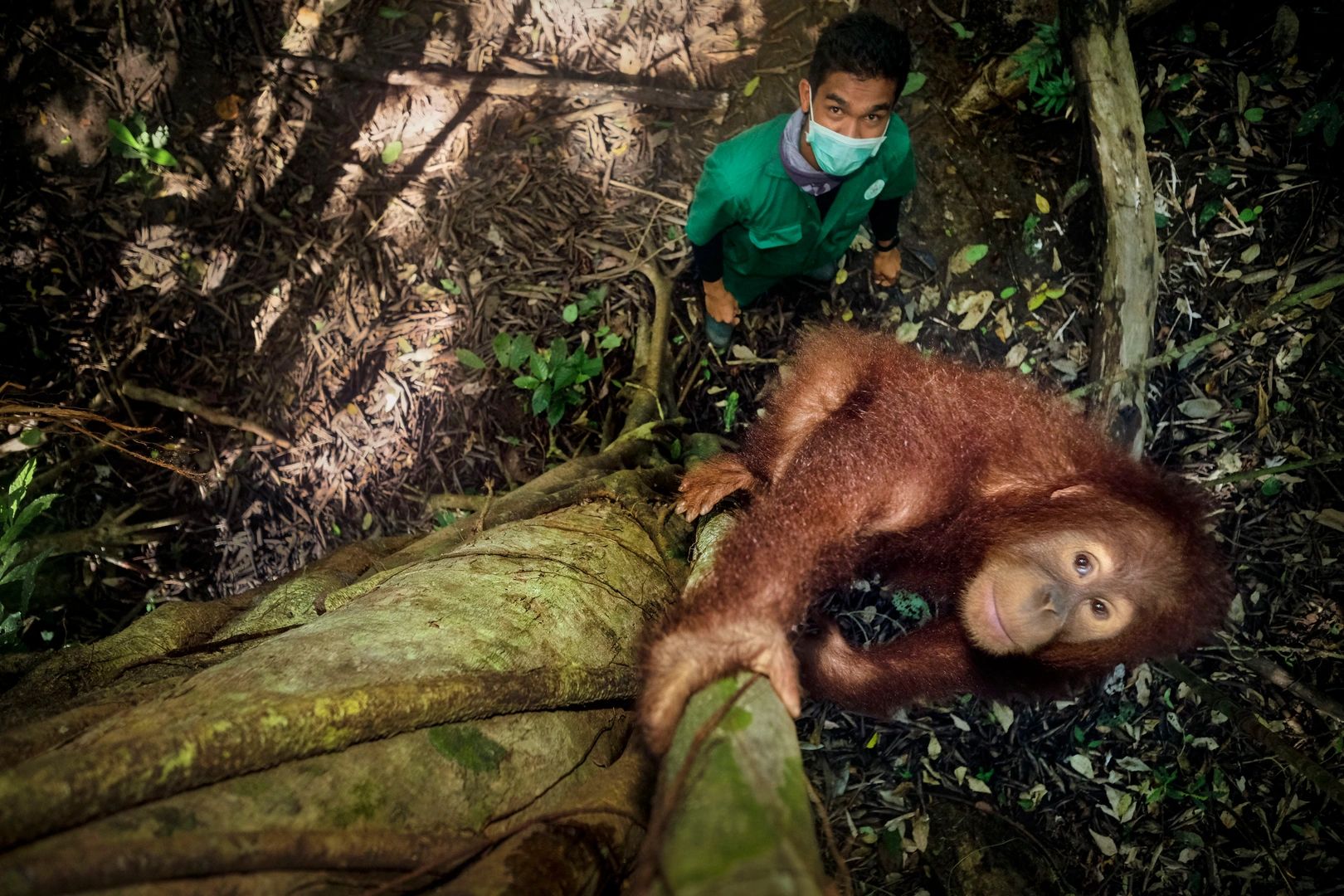
Other winners of this year’s competition include Alain Schroeder, whose work documents efforts to help conserve one of the world’s most endangered great apes: orangutans. His series, titled Saving Orangutans, followed conservation teams working to rescue, treat and rehabilitate the animals.
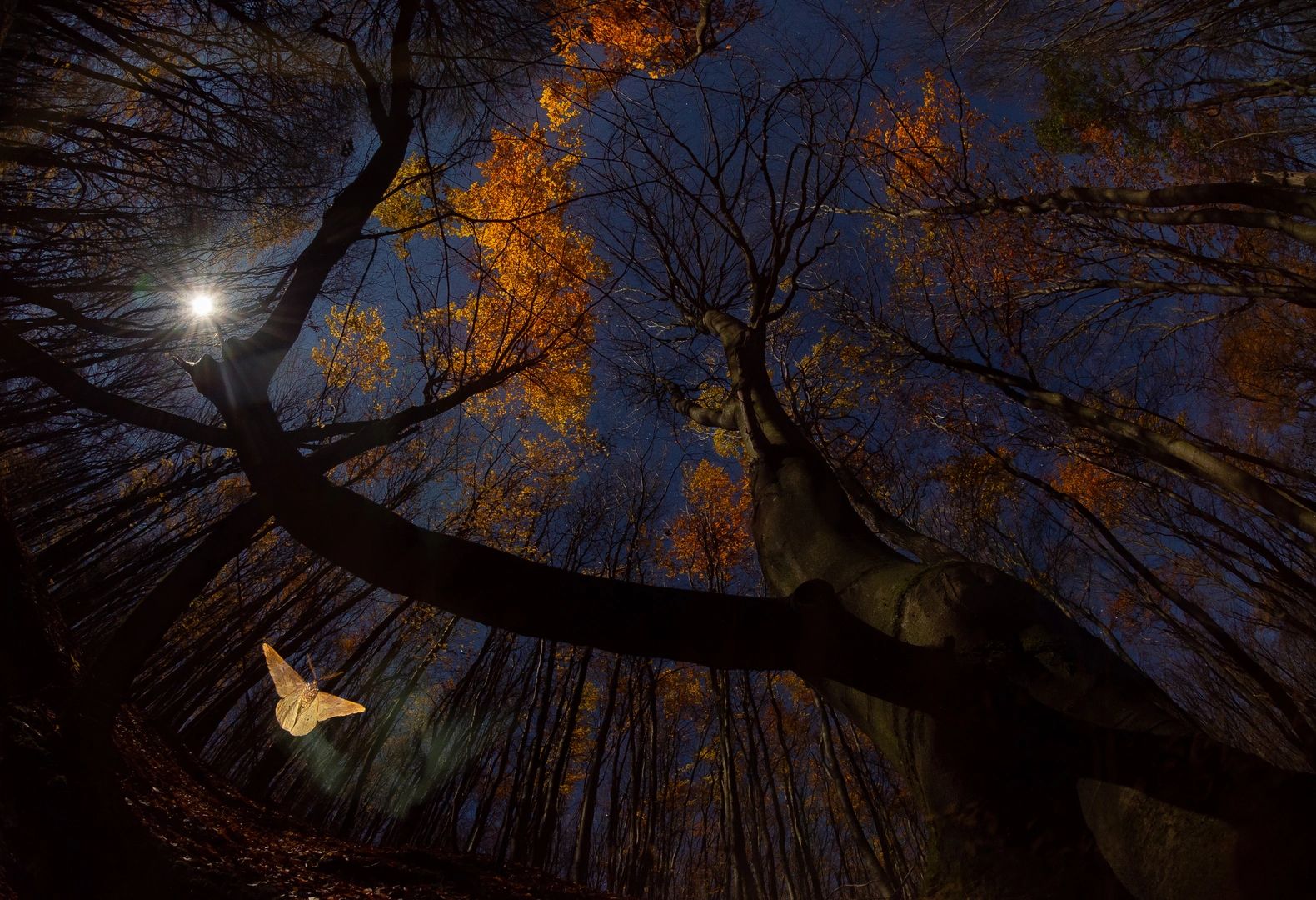
Imre Potyó’s image Moonlight won the Carpathian Basin category, which celebrates local photographers. In the image, he captures the beauty of winter moths moving through a Hungarian forest.
The organisers of the international competition, which is in its third year, note that it attracted more than 2,100 entries from photographers and filmmakers across 35 countries. The OurNature Environmental Photo & Video Award aims to raise awareness and demonstrate how photography can contribute to positive environmental change.
A selection of winning and finalist photographs will be presented in a free exhibition in Budapest’s Széna Square. It will remain open 24 hours a day and will be on display for approximately one month.