
A new species of clam has been discovered living inside the digestive tract of a deep-sea urchin.
The extraordinary bivalve was found thousands of metres deep at the bottom of the Great Australian Bight, a vast bay off the southern coastline of mainland Australia.
The discovery of the new clam species – named Vaticinaria gulicola after the Latin words for ‘throat’ and ‘inhabitant’ – is published in the journal ZooKeys.
“We were absolutely stunned to find this bivalve living inside the throat of a deepwater sea urchin,” says researcher Paul Valentich-Scott of the Santa Barbara Museum of Natural History.
Valentich-Scott and colleagues made the discovery while surveying the floor of the Great Australian Bight, where they found clams encased inside strange, thin tubes. To find out what the tubes were, they took DNA samples, which showed them to be the oesophagus of the urchin Carnarechinus clypeatus.
“A Russian scientist [Alexander Mironov] originally thought these clams were being eaten by the sea urchin,” explains Valentich-Scott, “but we later determined that it was actually living inside the oesophagus.”
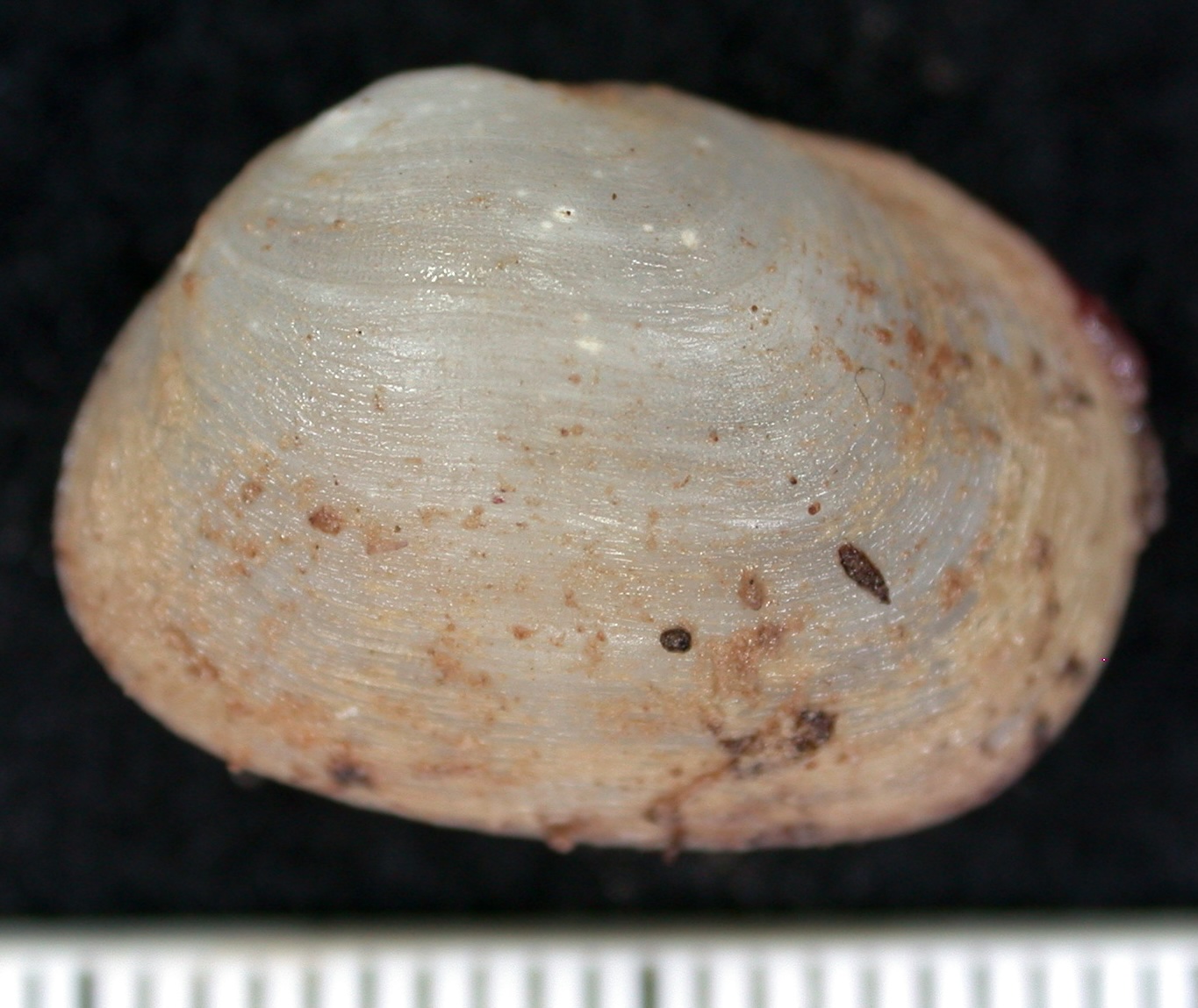
It’s not unusual for clams to live with other animals, but they normally attach themselves to the outside of their host – not inside them. Vaticinaria is the first known clam genus to be found living inside a sea urchin.
V. gulicola measures up to 19mm and has a slightly translucent, rounded shell. It is the second deepest-living clam of its superfamily (Galeommatoidea) on record. Beyond that, very little is known about the species or its host, says Valentich-Scott: “The host sea urchin has never been collected intact, so we really don’t even know what it looks like. We have no idea how this bivalve can live inside the throat of the urchin, or what it eats.”
One theory is that the clams feed off the nutrient-rich sediment that the urchin ingests.
“Further deep-sea sampling and closer examination of potential host organisms will undoubtedly reveal even more species of these fascinating bivalves,” the authors conclude in their study.
Find out more about the study, published in the journal ZooKeys.
Top image: urchin Carnarechinus clypeatus with Vaticinaria gulicola emerging from right side. Credit: Paul Valentich-Scott et al., 2026


