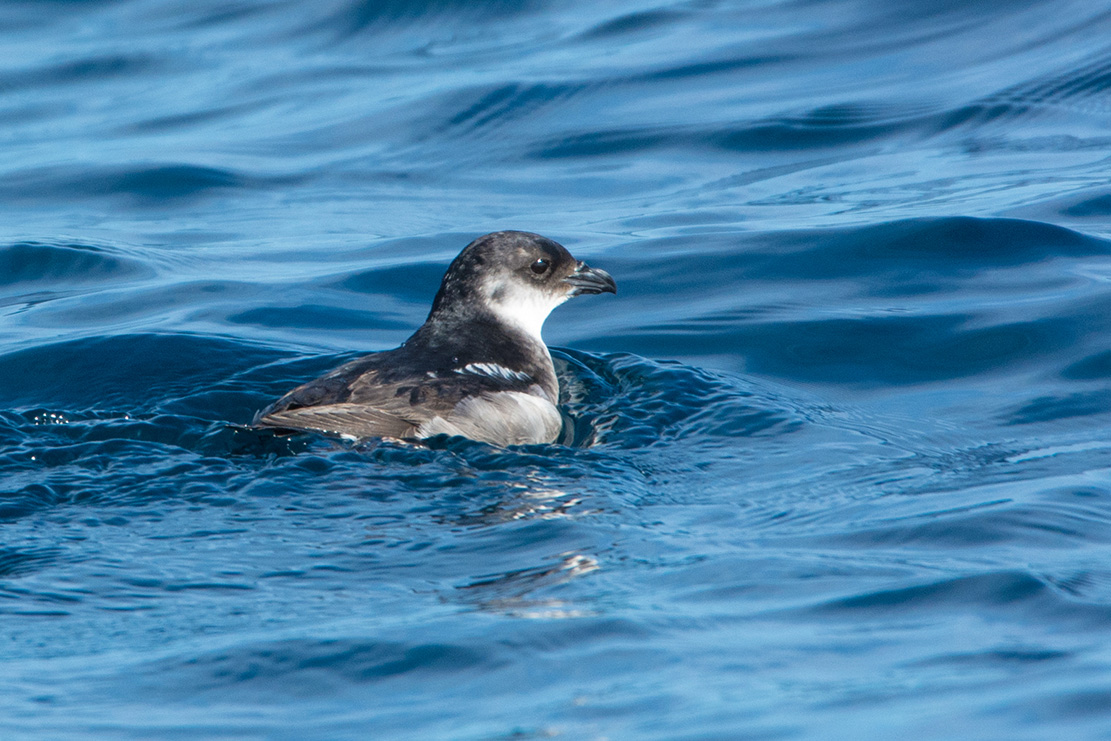
Peruvian diving petrels have made a remarkable comeback on Choros Island, off the coast of northern Chile.
According to a new study published in Marine Ornithology, the population on Choros, an important breeding ground, rocketed up from approximately 12,000 breeding pairs in 2013 to nearly 90,000 breeding pairs in 2024.
The remarkable increase was achieved through conservation work, including the removal of invasive rabbits from the island and restoring critical nesting habitat, with the petrels’ nesting area expanding from 3.2 hectares in 2010 to more than 10 hectares in 2024.
The recovery has helped contribute to the species being down-listed from Endangered to Near Threatened in 2020.
“Removing invasive rabbits was the game-changer,” says María José Vilches, Island Conservation’s conservation impact manager, who led the work.
“They were degrading habitat, stripping vegetation and damaging the burrows Peruvian diving petrels need to nest. That matters because Choros Island is the species’ primary breeding site in Chile and one of its most important breeding strongholds anywhere in the world.
"Previous research found that about 95% of Chile’s breeding population nested on Choros Island, so improving conditions there has an outsized impact on the species’ future. Once the invasive rabbits were gone, the island started to recover. Nesting habitat expanded, and conditions improved greatly for breeding birds.”
Researchers at Universidad Católica del Norte, who published the paper, estimate that the population on Choros Island, which forms part of Humboldt Penguin National Reserve, has recovered approximately 300-fold since 1980.
“The 300-fold recovery reflects decades of on-going conservation effort, not just the work since 2013,” explains Vilches.
“The Peruvian diving petrel population was slowly but steadily recovering thanks to protections that reduced disturbance and safeguarded breeding areas. What makes the 2013 rabbit eradication so significant is that recovery accelerated significantly.
"The study found that population growth more than doubled following rabbit removal. Restoring the island appears to have unlocked a much faster phase of recovery, helping turn a conservation success into an extraordinary one.”
Island Conservation also used social attraction techniques on nearby Chanaral Island, including artificial burrows and audio playback of bird calls, to help Peruvian diving-petrels return to and recolonise restored areas.
The success story on Choros offers hope at a time when many seabird species around the world are in decline. “The big lesson is that if you restore an ecosystem, wildlife can recover remarkably quickly,” says Vilches. “When we remove threats, restore habitat and help species reclaim their breeding grounds, recovery isn't just possible - it can happen far faster than many people imagine.
More amazing wildlife stories from around the world
- Rare bird species breeds in UK for first time ever
- Forest eagle finds goose eggs in nest. What happens next is staggering
- Coyote finds vulture nest in Texas. What it does next has never been caught on camera before
- Birdwatchers spotted a black vulture nesting on the roadside. What it was sitting on amazed them all
- Eagle snatches owl and carries it into forest – then something wild happens
Top image: Choros Island, Chile. Credit: Tommy Hall